 Peptides Academy
Best Copper Peptide (GHK-Cu) Products in 2026
Copper peptides — specifically GHK-Cu — are the most broadly studied peptide in skincare, with 140+ published studies on wound healing, collagen stimulation, and antioxidant gene activation. But concentration matters, formulation matters, and not every 'copper peptide' product delivers the real thing.
GHK-Cu (Glycyl-L-Histidyl-L-Lysine:Copper) is a naturally occurring tripeptide that declines with age, from ~200 ng/mL at age 20 to ~80 ng/mL by age 60. Topical application at 0.1–1% concentrations has been shown to improve skin density, elasticity, and firmness in clinical measurements.
Key considerations when choosing a copper peptide product:
**Concentration:** effective concentrations in studies range from 0.1% to 1%. Higher is not always better — copper peptides can cause skin irritation above 1%. Products rarely disclose exact concentrations, but NIOD CNIACI lists 15% of a copper peptide complex (not the same as 15% GHK-Cu).
**Formulation compatibility:** GHK-Cu is incompatible with direct vitamin C (ascorbic acid) — copper ions catalyze ascorbic acid oxidation, deactivating both. Separate by 8+ hours or use on alternate days. Compatible with niacinamide, hyaluronic acid, retinol (with care), and all peptides.
**Blue color:** authentic GHK-Cu solutions have a characteristic blue color from the copper ion. Products claiming copper peptide content should show at least a faint blue tint — colorless products likely contain negligible concentrations.
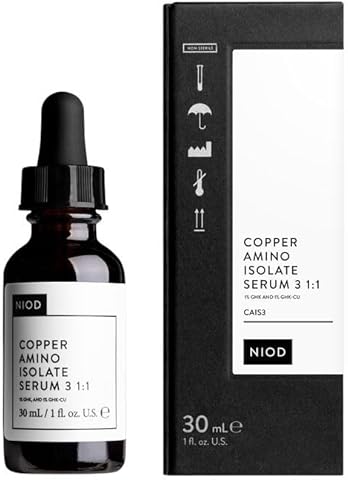
Copper Amino Isolate Serum 3:1 (CAIS2)
NIOD
Second-generation pure copper peptide concentrate from Deciem's premium skincare line — the most concentrated GHK-Cu serum in the commercial market.
$50-70

Copper Peptide Serum
The INKEY List
Single-peptide copper serum with GHK-Cu at 2% plus hyaluronic acid, positioned as an entry-level copper peptide option.
$16-20

Buffet + Copper Peptides 1%
The Ordinary
Multi-peptide serum combining Matrixyl 3000, Argireline, SYN-AKE, Relistase, and 1% Copper Peptides (GHK-Cu) in a single formulation.
$28-32
Links to retailers are affiliate links. We may earn a commission on qualifying purchases at no extra cost to you.