 Peptides Academy
GHK-Cu (Copper Tripeptide-1)
Cosmetic-Grade
GHK-Cu is a tripeptide of glycine-histidine-lysine complexed to a copper(II) ion. GHK is present in human plasma, saliva, and urine, and its levels decline with age. It is one of the most discussed peptides in cosmetic dermatology. Gene-expression analyses, including Connectivity Map work, suggest GHK can up- or down-regulate at least 4,000 human genes; reviews describe suppression of transforming growth factor beta-1, increased antioxidant enzymes such as superoxide dismutase, and stimulation of collagen, elastin, and glycosaminoglycan synthesis by fibroblasts. Reviews of topical use report that GHK-Cu tightened skin, improved elasticity and firmness, and reduced fine lines, photodamage and hyperpigmentation in controlled studies of aged skin, and that it increases hair follicle size and has been used to improve hair transplant success. Much of this literature is summarized by researchers affiliated with a company that develops GHK products, and the underlying clinical studies are small, so independent, well-powered trials are still needed. GHK-Cu is used mainly in topical cosmetics.
Source references
Specifications
| Origin / Manufacturer | Synthetic (identical to endogenous) |
| Regulatory Status | INCI-listed |
| Active Components | Copper Tripeptide-1 |
| Storage | Topical formulations: store below 25°C, avoid sunlight |
| Form Factor | Serum, cream, hair treatment, or lyophilized powder |
Frequently Asked Questions
Sources & References
Every clinical claim on this page traces to a primary peer-reviewed source.
- 1Pickart L, Margolina A. Regenerative and Protective Actions of the GHK-Cu Peptide in the Light of the New Gene Data. International journal of molecular sciences. 2018;19(7). doi:10.3390/ijms19071987 PMID:29986520
- 2Pickart L. The human tri-peptide GHK and tissue remodeling. Journal of biomaterials science. Polymer edition. 2008;19(8):969-88. doi:10.1163/156856208784909435 PMID:18644225
- 3Hong Y, Downey T, Eu KW, et al.. A 'metastasis-prone' signature for early-stage mismatch-repair proficient sporadic colorectal cancer patients and its implications for possible therapeutics. Clinical & experimental metastasis. 2010;27(2):83-90. doi:10.1007/s10585-010-9305-4 PMID:20143136
- 4Pickart L, Vasquez-Soltero JM, Margolina A. GHK Peptide as a Natural Modulator of Multiple Cellular Pathways in Skin Regeneration. BioMed research international. 2015;2015:648108. doi:10.1155/2015/648108 PMID:26236730
Reviewed by
Clinical Research Review Board
Pharmacology & Endocrinology Review
All clinical claims cross-checked against primary sources. Read our editorial policy →
Consumer products featuring GHK-Cu (Copper Tripeptide-1)
All skincare →Finished serums, creams, and treatments that contain GHK-Cu (Copper Tripeptide-1). Links go to retailers; we may earn a commission.

Protini Polypeptide Cream
Drunk Elephant
Signal-peptide moisturizing cream combining pygmy waterlily stem cell extract with nine signal peptides and amino acid complexes.
$68-78
Peptide Glazing Fluid
Inn Beauty Project
A viral peptide serum combining 10% peptide complex with glycerin and turmeric for the 'glass skin' effect — one of the most-searched peptide skincare products of 2025–2026.
$32-36

Liquid Peptides
Medik8
Medik8's flagship multi-peptide serum with Argireline, copper peptides, and a signal-peptide complex in a lightweight fluid.
$70-90

Multi-Peptide Moisturizer
Naturium
Affordable multi-peptide moisturizer combining Matrixyl 3000, Argireline, and Copper Tripeptide-1 with ceramides — a budget alternative to The Ordinary Buffet in cream form.
$20-25
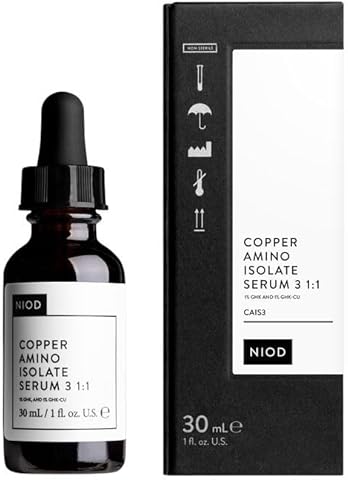
Copper Amino Isolate Serum 3:1 (CAIS2)
NIOD
Second-generation pure copper peptide concentrate from Deciem's premium skincare line — the most concentrated GHK-Cu serum in the commercial market.
$50-70

Peptide 21 Wrinkle Resist Serum
Peter Thomas Roth
Peptide-forward anti-aging serum featuring 21 peptides and neuropeptides alongside squalane and hyaluronic acid, positioned as a premium Argireline-plus alternative.
$90-105

Copper Peptide Serum
The INKEY List
Single-peptide copper serum with GHK-Cu at 2% plus hyaluronic acid, positioned as an entry-level copper peptide option.
$16-20

Buffet + Copper Peptides 1%
The Ordinary
Multi-peptide serum combining Matrixyl 3000, Argireline, SYN-AKE, Relistase, and 1% Copper Peptides (GHK-Cu) in a single formulation.
$28-32

Multi-Peptide Serum for Hair Density
The Ordinary
Scalp-applied peptide serum combining REDENSYL, PROCAPIL, CAPIXYL, and BAICAPIL peptide complexes, targeting hair follicle activity and density.
$16-20
Related Peptides
BPC-157
Research-Grade
A 15-amino-acid peptide fragment derived from gastric juice protein BPC, studied extensively in animal models for tissue healing and gut integrity.
Hydrolyzed Collagen Peptides
Various (Supplement)
Enzymatically hydrolyzed collagen broken into short peptides that survive digestion — marketed for skin, joint, and connective-tissue support.
Matrixyl 3000 (Palmitoyl Tripeptide-1 + Palmitoyl Tetrapeptide-7)
Various (Topical Cosmetic)
A well-studied topical peptide combination marketed for wrinkle reduction — the palmitoyl lipid tail enables penetration past the stratum corneum.
Palmitoyl Tetrapeptide-7
Cosmetic-Grade
A lipopeptide that suppresses IL-6 and glycation-driven inflammation in skin, often combined with Palmitoyl Oligopeptide in anti-aging formulations (Matrixyl 3000).
TB-500 (Thymosin β4 Fragment)
Research-Grade
Synthetic peptide based on the actin-binding region of Thymosin β4, a protein studied for cell migration and tissue repair in skin, cornea, and heart models.